How Golf Courses Can Offer Food Delivery Without Building a Halfway House
A new halfway house can seem like the obvious answer to golfers who want more convenient food and beverage service. But a permanent structure brings construction expense, utilities, permitting, staffing, equipment, inventory, and year-round maintenance. For many courses, the first question should be whether the existing clubhouse kitchen can serve more locations before the operator builds another one.
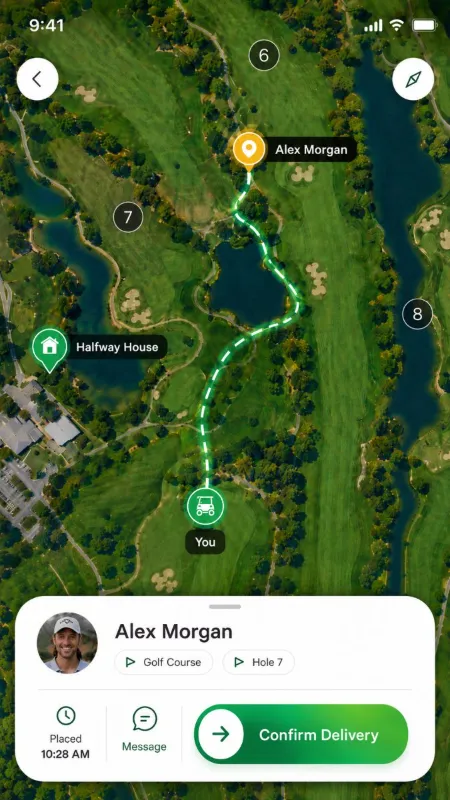
With golf course food delivery, the kitchen can remain the production hub while a runner completes on-course handoffs.
Use the kitchen you already have
Start by identifying food that can survive the journey from clubhouse to course. Wraps, sliders, sandwiches, salads, and securely packaged beverages are more practical than delicate plated dishes. Establish realistic preparation and travel times. Not every restaurant item needs to appear on the delivery menu.
Replace the second counter with a digital order point
A golfer does not need to stand at a window to submit a ticket. With ClubGrub, customers can order from an app, web browser, or QR code. Staff receive the order in the kitchen and prepare it for pickup or delivery. The golfer can request a configured delivery destination instead of doubling back to the clubhouse.
Golf course QR code ordering is especially useful when visiting golfers may not want to download an app. Place clear scan-to-order instructions on cart windshields, starter cards, or appropriately designated course locations.
Define a sustainable delivery zone
On-course delivery is not automatically cheaper than a halfway house. A runner still needs safe travel routes, available labor, packaging, and order density. Map your course and start with a realistic section of holes. Estimate round-trip delivery time at typical traffic levels, and adjust service expectations during events or poor weather.
Use pickup where delivery is not economical
Not every course needs delivery to every hole. For some facilities, an order-ahead pickup point at the existing clubhouse or a small staffed handoff station creates enough convenience. The important change is that golfers can order before reaching the service location, helping staff prepare in advance.
Compare capital expense with recurring expense
Evaluate both options across a full season: construction and utilities for a building versus ordering technology, additional fulfillment labor, packaging, and any equipment needed for a delivery model. Include projected food and beverage contribution margin, not just gross revenue.
Build the experience around pace of play
A delivery program should improve access without sending golfers off-route or creating cart-path congestion. Set clear meeting-point procedures and train staff to keep handoffs brief. Monitor order and delivery times as carefully as you track sales.
ClubGrub brings digital ordering, kitchen tickets, and GPS-guided fulfillment together so operators can test expanded on-course food and beverage ordering without treating a new building as the only option.