How GPS-Powered Delivery Works on a Golf Course
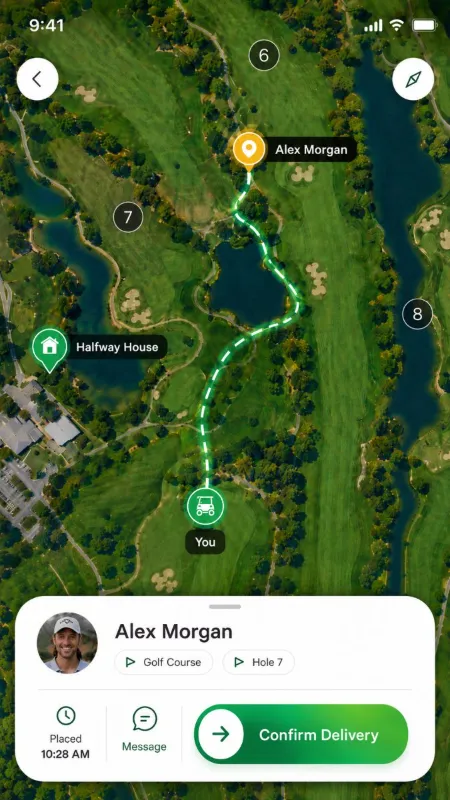
Delivering a burger to a clubhouse is easy to describe: everyone knows the address. Delivering that burger to a golfer who has moved from the sixth fairway to the seventh green is different. A golf course spans hundreds of acres, and staff need a practical way to identify the customer and complete the handoff without disrupting play.
That is the problem GPS-powered on-course delivery is designed to solve.
Step 1: The golfer places an order
A golfer opens the club's mobile ordering experience, browses available food and beverages, customizes items, and selects an eligible delivery location. With ClubGrub, members and guests can order through an app, a web experience, or a QR code, depending on how the club has configured access.
Accurate delivery depends on the ordering device providing suitable location information and the service being enabled for that part of the property. Operators should explain location permissions during onboarding rather than assume every customer has them enabled.
Step 2: The kitchen receives the ticket
Orders reach the operator's order-management workflow with menu choices, modifiers, and fulfillment information. The team prepares the items and identifies whether they are for pickup or delivery. Clear order acceptance and readiness updates help avoid unnecessary calls between golfers, staff, and the kitchen.
Step 3: A runner uses the location to find the golfer
The staff delivery view provides an on-course location rather than relying solely on a verbal description like "somewhere past the seventh tee." A runner can navigate toward the golfer's pin using available course paths and local operating practices. GPS is an aid to dispatch, not a guarantee that a golfer's device remains perfectly positioned or that every route is accessible.
Step 4: The team completes a safe handoff
Delivery staff should confirm the customer or order number and select safe, low-disruption meeting points. Clubs should define where vehicles may travel and how to handle restricted areas, lightning delays, closed paths, and weather interruptions. Alcohol delivery also needs to comply with applicable licensing and age-verification requirements.
Why this differs from a beverage cart loop
A beverage cart follows a route whether or not a golfer wants something. An on-demand workflow begins with the request. That can make dispatch more purposeful, but the relative efficiency depends on order density and runner availability. Some courses benefit from keeping the cart and adding delivery for made-to-order meals.
What to evaluate before launch
Test actual GPS accuracy on the course; map safe routes; choose travel-friendly menu items; set realistic time estimates; train runners; and measure delivery completion times. Start with a manageable geography and expand once fulfillment is reliable.
ClubGrub combines a golf course food delivery app, kitchen tickets, and a GPS-guided runner experience to bring hospitality beyond the clubhouse. Its website highlights deployment at courses including Ballyneal and TPC Jasna Polana.